Aeron Glass Fiber Profiles About
We are Gujarat, India-based manufacturer and supplier of premium quality Aeron Glass Fiber Profiles that can be used in light to heavy duty structural applications. It is made up of premium quality materials such as polyester, vinyl ester or epoxy that give high strength and rigidity. It is in high demand due to its excellent thermal and impact resistance. This component can be used in electrical applications due to its excellent current insulation.
Engineered for Strength and VersatilityAeron Glass Fiber Profiles are crafted using E-glass and state-of-the-art pultrusion techniques, resulting in robust structural elements suitable for demanding environments. They boast high tensile and flexural strength, making them ideal for supporting industrial equipment, walkways, ladders, and cable trays. The lightweight nature means easier installation and lower transportation costs over traditional steel components.
Unmatched Durability in Harsh ConditionsOur profiles are designed to endure tough weather, chemicals, and UV exposure. The high corrosion resistance allows for prolonged use in aggressive industrial settings without degradation. The fire-retardant, UV-resistant coatings further add to their longevity, while low water absorption and thermal conductivity ensure consistent performance across changing temperatures.
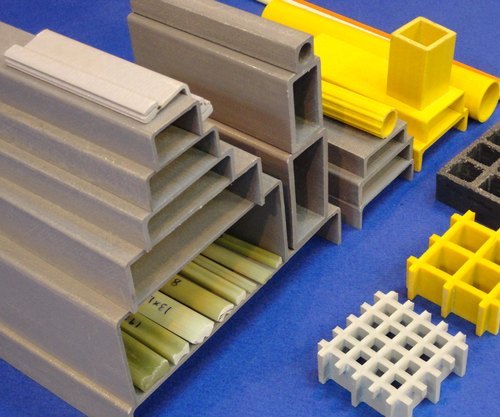
Customizable for Diverse ApplicationsAvailable in custom shapes, sizes, thicknesses (generally 3-8 mm), and colors, Aeron Glass Fiber Profiles can be configured for a vast array of uses. Whether it's industrial cable ducts, support structures, gratings, or building construction, we provide tailored solutions to suit specific project requirements, ensuring optimal fit and functionality in every application.
FAQ's of Aeron Glass Fiber Profiles:
Q: How are Aeron Glass Fiber Profiles manufactured?
A: Aeron Glass Fiber Profiles are produced using the pultrusion moulding technique, which ensures uniform thickness, high precision, and consistent quality. E-glass fibers are impregnated with resin, then pulled through a heated die to form durable, coated profiles in various shapes and sizes.
Q: What benefits do these profiles offer compared to steel?
A: These fiberglass profiles are significantly lighter than steel, making them easier to handle and install. They are also non-conductive, highly resistant to corrosion and chemicals, provide excellent insulation, and have a lower thermal conductivity than metal, making them better suited for demanding industrial environments.
Q: When should I use Aeron Glass Fiber Profiles in construction projects?
A: You should consider these profiles when your project requires lightweight, corrosion-resistant, and electrically insulating materials, particularly for cable trays, gratings, walkways, ladders, or any structural element exposed to harsh environments or electrical hazards.
Q: Where are Aeron Glass Fiber Profiles typically applied?
A: These profiles are widely used in industrial and structural engineering; common applications include building construction frameworks, cable ducts, ladders, gratings, walkways, cable trays, and other support structures in harsh chemical or outdoor environments.
Q: What is the process for customizing length, thickness, or shape?
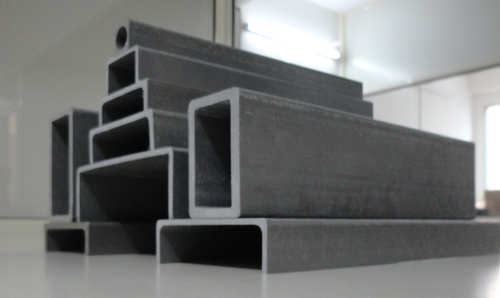
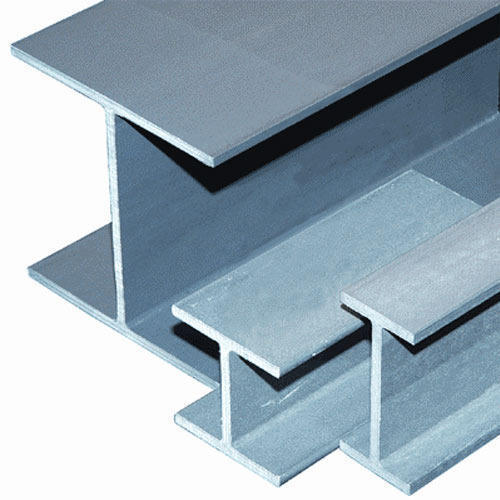
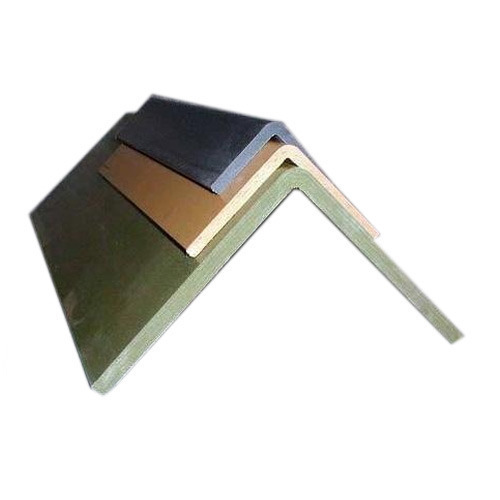
A: Customers can specify their required dimensions-length (up to 6 meters), thickness (typically 3-8 mm), and desired shape (channel, angle, I-beam, rod, tube, flat, or custom profiles). The production team then fabricates the profiles to these exact specifications using pultrusion technology.
Q: How do these profiles perform in fire safety and UV exposure?
A: Aeron profiles are fire-retardant, tested as per IEC standards. They also feature UV-resistant coatings, ensuring excellent performance and color retention even after long-term exposure to sunlight, making them suitable for indoor and outdoor use.
Q: What level of water absorption and electrical insulation do these profiles offer?
A: These fiberglass profiles absorb less than 0.5% water by weight, making them suitable for high-moisture settings. Their excellent electrical insulation properties ensure they do not conduct electricity, enhancing safety in electrical and industrial applications.

 Send Inquiry


 Send Inquiry



 Send Inquiry
 Send SMS
 Call Me Free


 English
 Spanish
 French
 German
 Italian
 Chinese (Simplified)
 Japanese
 Korean
 Arabic
 Portuguese