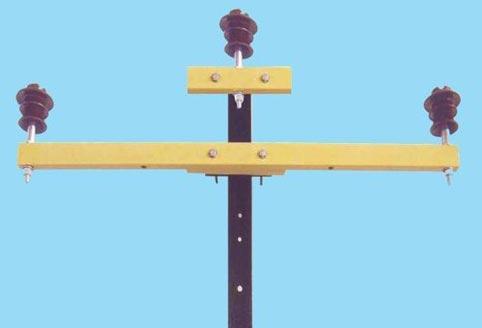
About FRP Pultruded Cross Arm
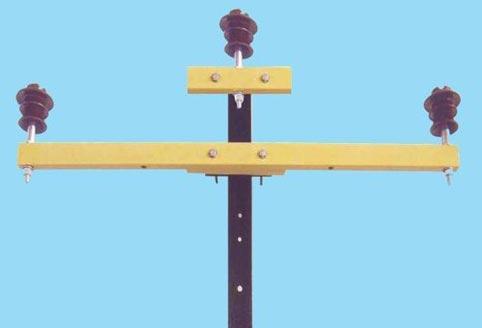
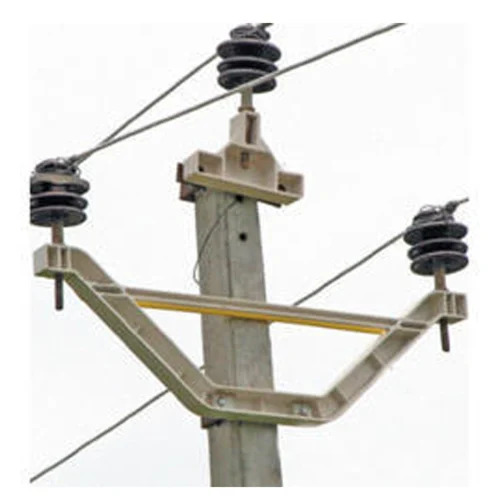
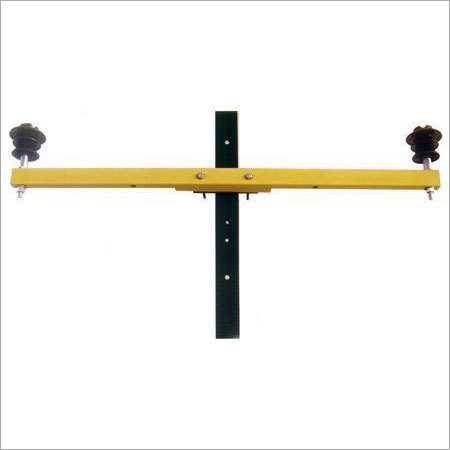
The FRP Pultruded cross arm is accessible with many salient features. It can fulfill various industry requirements and is quite popular for business purposes. It has accessibility in different variety of shapes. FRP Pultruded cross arm is a module specifically designed for industry needs. It is offered with sophisticated technology and works in a simple way. This is the best solution that offers functionality to electrical power supply and works as the simple transferring cable.
Product Details
| Application | Electrical pole |
| Material | FRP |
| Technology | Pultrusion |
| Length | 1150 mm |
| Holes per pin insulators | 22 mm dia spaced at 1070 mm |
| Clamping holes | 18 mm dia spaced at 200 mm |
 Advanced Electrical Protection
This FRP Pultruded Cross Arm is engineered to prioritize operational safety. It offers critical protections such as over voltage, short circuit, and reverse polarity safeguards. The integrated auto cut-off function activates when fully charged, reducing the risk of electrical incidents and prolonging equipment life. The digital display gives at-a-glance system status, providing enhanced monitoring in industrial settings.
High-Quality FRP ConstructionConstructed from premium fiberglass reinforced plastic, the cross arm boasts excellent rigidity and hardness, ensuring reliability under demanding conditions. The coated surface further elevates its resistance to environmental influences, minimizing maintenance while supporting longevity. Its rectangular shape supports optimal load distribution and compatibility with diverse industrial frameworks.
FAQ's of FRP Pultruded Cross Arm:
Q: How is the FRP Pultruded Cross Arm installed in industrial applications?
A: The FRP Pultruded Cross Arm is designed for straightforward integration into industrial systems. Its rectangular shape allows compatibility with standard mounting and support hardware. Manufacturers typically provide installation guides for secure fitting, ensuring both structural stability and electrical safety.
Q: What benefits does FRP material provide compared to traditional materials for cross arms?
A: FRP, or Fiberglass Reinforced Plastic, offers several advantages over materials like wood or metal. It is lightweight, corrosion-resistant, electrically non-conductive, and highly rigid. These qualities enhance product longevity, reduce maintenance, and increase safety in high-voltage industrial environments.
Q: When should I consider replacing the cross arm under the 1-year warranty?
A: If you notice structural damage, malfunctioning protections, or issues with the digital display or fan cooling within the first year of use, you should contact your supplier or manufacturer. They can guide you on warranty claims and arrange for repairs or replacement as necessary.
Q: Where are these FRP Pultruded Cross Arms manufactured and supplied from?
A: These cross arms are manufactured and supplied by leading exporters and manufacturers located in India. They serve both domestic and international industrial markets, ensuring reliable delivery and support.
Q: What is involved in the manufacturing process of FRP Pultruded Cross Arms?
A: The cross arms are produced through a pultrusion process, where fiberglass strands are pulled through a resin bath and then shaped in a heated die, forming a strong and rigid profile. After forming, they are coated to enhance environmental resistance and electrical insulation.
Q: How does the digital display and fan cooling enhance the functionality of the cross arm?
A: The integrated digital display provides real-time status updates for improved monitoring of electrical load and system health. The fan cooling system helps maintain optimal operating temperatures, which prolongs the lifespan of the equipped protections and the cross arm itself.
Q: What applications or industries commonly use these FRP Pultruded Cross Arms?
A: They are widely used in power distribution, industrial infrastructure, and utility companies, where their electrical insulation and robust protection features ensure safe and efficient energy delivery in challenging environments.



 Send Inquiry



 Send Inquiry



 Send Inquiry
 Send SMS
 Call Me Free


 English
 Spanish
 French
 German
 Italian
 Chinese (Simplified)
 Japanese
 Korean
 Arabic
 Portuguese