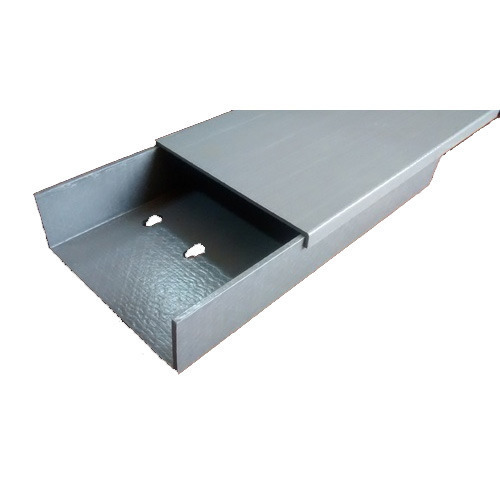
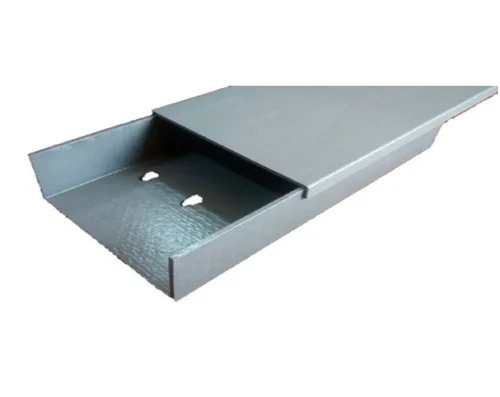
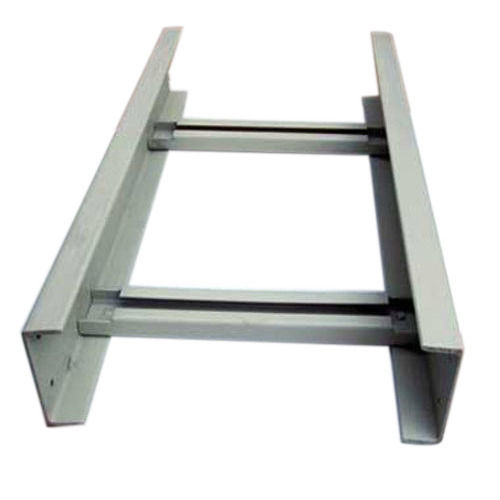
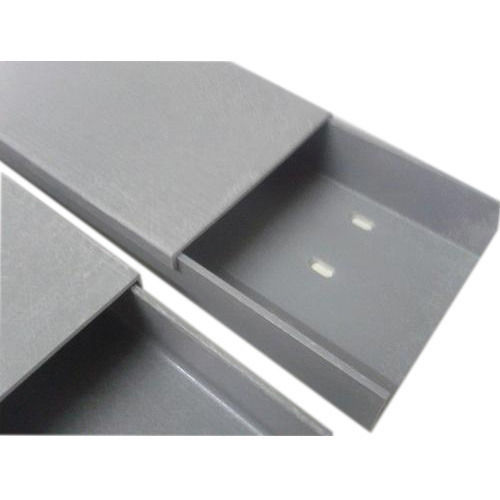
About FRP Cable Tray With Cover
FRP cable trays are used for various purposes in these days. FRP Cable Tray With Cover is created with various fitting sizes, transitions, shapes and much more. It is incorporated based on the requirement of users. The trays assist to process fittings such as cross, reducers, bends, tees and etc. It has collections of covers offered for duct fittings. Some of suppliers of the trays are delivering with several types of product. It is equipped with good materials to enhance fitting by using trays. The manufacturer has constructed trays operated for different industry to detect chemicals and waste.
Product details of FRP Cable Tray With Cover
|
Density
|
1.6g/cm3
|
|
Tray Type
|
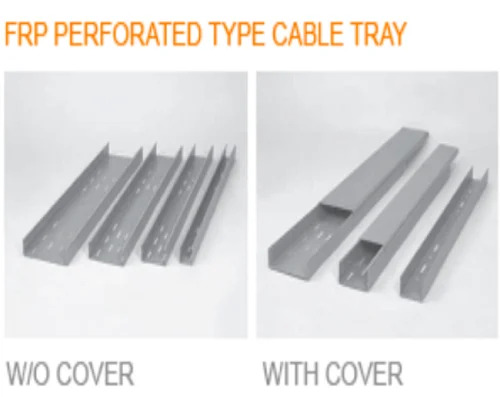
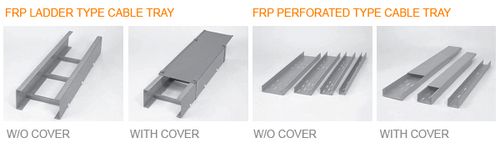
Perforated Cable Tray
|
|
Thickness
|
3 mm - 6 mm
|
|
Material
|
Fiber Reinforced Plastic (FRP)
|
|
Tensile Strength
|
2500Mpa
|
Superior Durability and Corrosion Resistance
Our FRP Cable Tray With Cover provides exceptional durability and withstands corrosive agents found in industrial settings. Fiber Reinforced Plastic ensures the tray maintains its mechanical strength and performance even after years of exposure, resulting in lower maintenance requirements and extended lifespan.
Tailored for Varied Industrial Applications
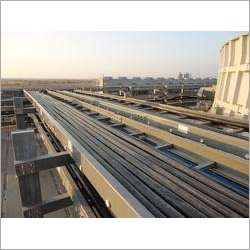
This cable tray system is specially designed for sectors such as power plants, chemical processing, refineries, and offshore platforms. Suitable for complex cable routing, the available width (501000 mm) and thickness (36 mm) options ensure the perfect fit for diverse project needs.
FAQs of FRP Cable Tray With Cover:
Q: How is the FRP Cable Tray With Cover installed in industrial settings?
A: Installation of the FRP Cable Tray With Cover involves securely mounting the trays along cable routing paths using appropriate support brackets and fixings, ensuring proper alignment and protection for cables in industrial environments such as power plants and chemical plants.
Q: What are the benefits of using Fiber Reinforced Plastic (FRP) cable trays over traditional materials?
A: FRP cable trays are highly resistant to corrosion, lightweight for easier handling, and non-conductive to enhance electrical safety. They also offer excellent longevity and require minimal maintenance compared to metal options.
Q: Where are these FRP cable trays typically used?
A: These cable trays are widely implemented in power plants, chemical plants, offshore platforms, and refineries. Their robust design and resistance to harsh chemicals make them ideal for a broad range of industrial cable management applications.
Q: What processes are involved in manufacturing FRP Cable Trays?
A: The trays are manufactured using a composite process where high-strength glass fibers are embedded in a resin matrix, molded, and cured to achieve the specified thickness (36 mm) and standard length of 3 meters, resulting in a product with excellent mechanical and chemical resistance properties.
Q: When should FRP Cable Trays be preferred over metallic trays?
A: FRP Cable Trays should be chosen when superior corrosion resistance, electrical insulation, and minimal maintenance are priorities, especially in environments exposed to chemicals or moisture, such as refineries and offshore platforms.
Q: What width and length options are available for FRP Cable Trays with covers?
A: The trays are offered in widths ranging from 50 mm to 1000 mm and a standard length of 3 meters, allowing flexibility for different installation requirements and cable volumes.
Q: What is the primary usage of FRP Cable Trays in cable routing?
A: The primary purpose is to provide a safe, organized pathway for electrical cables, safeguarding them from environmental hazards while facilitating straightforward maintenance and future cable additions in industrial infrastructures.


 Send Inquiry


 Send Inquiry



 Send Inquiry
 Send SMS
 Call Me Free


 English
 Spanish
 French
 German
 Italian
 Chinese (Simplified)
 Japanese
 Korean
 Arabic
 Portuguese